

1·
7 days agoUgh. Best of luck to your youngest.
Ugh. Best of luck to your youngest.
I saw something maybe a year ago that was about how Florida has some of the best education stats in the USA.
…
Yeah…

AI companies don’t see normal people at all. They’re too busy worrying about keeping the scheme rolling or trying to birth the digital god they think will give their life meaning.
If you are rude, there’s harassment. Anything that makes your coworkers feel uncomfortable qualifies. You are riding on their desire to avoid conflict. If anyone who has half your willingness to engage in conflict arrives in your office, you will be gone the moment HR hears the word attorney because they don’t have your boss to answer to, they work on behalf of the company as a whole to prevent lawsuits. The company may reward you for being callous, but they’ll do the same to those above you, who will drop you like a sack of dog droppings the moment you become inconvenient for the company, hire someone cheaper, and pocket a bonus for shrinking the budget.
I’m guessing you are enough of an asshole you won’t change your behaviour, even after they fire you. You’ll just be that guy, neck deep in his cups, complaining about these snowflakes who ‘can’t stand not being coddled,’ (read, aren’t willing to put up with your BS) and ‘got you fired.’ You’re a loser. It just hasn’t hit you yet.
And if everyone’s distaste for being around you leads to bad quarterlies from your manager, bad peer reviews from your colleagues, your IT tickets being mysteriously deleted so they don’t have to deal with you, your team filing reports with HR for harassment, and no one liking you enough to give you the benefit of the doubt, you can take that rudeness into the interview process at a new company and see how far it gets you with their HR.
We also used to build houses to ‘breathe’, specifically encouraging air flow through the walls, etc. to carry away the water leaking in through all the unsealed holes, and allowing any efforts in heating and cooling to go out that same way. In the days of yore, the gas lines that fed English streetlamps with coal gas were allowed to just flow, even when not lit. It’s a wild thought to wonder how much longer the end of fossil fuels could have been put off if efficiency had been a priority from the start.
I recognise the name from other posts. They are a bit opinionated, which is less than optimal, but haven’t seemed like a troll just yet.
The Map and Territory is reference to a now fairly old metaphor for the distinction between reality and our conceptions of it. Theories/concepts/words/ideologies/etc. are metaphorical maps of the systems of the world, simplifying a wildly complex and seemingly chaotic world into, hopefully, broadly useful heuristics for predicting causal relationahips. Freud, Jung, Skinner, Lacan, Piaget, and everyone who has come after them have attempted to ‘map’ the causes and effects of the phenomena of the mind, creating what they hoped would be universalizable explanations for why people think and do what they think and do. This is what I was referring to. Does that help it make sense?
Almost nothing is universalizable or generalizable. Theories are maps. Assuming the map describes all territories is an individual error.

Seems cheaper.
I listened to a thing from a sex psychologist ages ago who talked about this. She said there was a connection between the developing arousal (sexual) and arousal (general emotional) that forms during the transition from childhood to adolescence, so there is commonly a connection formed between something the then-child has strong emotions toward, positive or negative, so a person can develop a sexual fixation on something beloved (mommy/daddy is perfect love personified. Dinosaurs are so frigging cool. etc.) or terrifying. (Mommy/daddy is mad. The monster is going to eat me all up. etc.)
Ignorant voting is the most common kind of voting.
I’m using a perfectly normal definition of ad. I’m not changing the definition. You are, by trying to include basic labelling as advertisement. It is a trick of language used by people in marketing to inflate their importance and minimise their personal responsibility. Advertising is the process of one party, as in person, group or organisation, paying a second party to send/project/play/display/etc. media to a third party with the purposes of manipulating their decisions, usually, though occasionally not, without the request and/or consent of the recipient. Only particularly obtuse people who want to justify this malign behaviour, which is harmful to individuals and society, try to conflate communication (a general concept encompassing everything from a nod to a multi-volume multimedia experience, including advertisement) and advertisement itself. (A particular form of communication) The problem is with the particular form and you cannot defend it by ignoring the distinction and defending the general, any more than you would accept defending a rapist by claiming their prosecution was an extremist attack on all men.
My use of ‘lie’ is also pretty routine, collectively referring to various forms of deceptive use of communication. There are a few people who would claim lies are only verbal and auditory, or don’t count as lies if the speaker/writer/originator intends no harm, or intends happiness, to the recipient, or that a statement’s truth value is dependent on it’s usefullness as a meme which perpetuates its host’s survival, etc. but those definitions are both less common and less useful, so I tend to ignore them.
Ergo, using deception, whether in outright falsehoods, (blatant lies) intentionally misleading truths, (lies of omission) or simple BS, (claims without regard for truth value; still deceptive, even when technically true when reviewed later) is inherent to advertising because even it’s most benign forms are BS. The truth of the matter is not changed by your denial of it, nor by blaming me for holding a more common definition of advertisement than the more vague and thus less useful one you are trying to foist upon me.
Now, it’s true I have taken the slightly risky position of stating an absolute as truth, but you should welcome that because it should have let you debunk my claim in a simple sentence or two. ABC.
A. Definitions of lie and advertising seen above.
B. Advertising is a subset of lies.
C. Lies are not a subset of advertising.
Where is there an advertisement that is not a lie?
I hadn’t listened to anything from Maher for something like a decade by the time I heard the podcast. He wasn’t really all that funny then, and really seems to have slid into the blue conservative space since. He has to be running on momentum or blackmail at this point. I don’t think he could get a laugh at a comedy club if no one knew his name.
Also, went and checked out If Books Could Kill. It was so painful to listen to I stopped after 45 minutes and gave up. Listening to two supposed professionals saying ‘then he said 1+1=3, which is just such horseshit, because everyone knows it’s 11,’ over and over again was depressing and annoying.
Thinking back, it does seem like tagging shows up more on infrastructure than adspace but I think that might just be because there is a lot more money invested by advertisers in replacing ads than there ever is on cleaning/repainting public structures. The signs at sporting events and billboards change hands or are updated fairly regularly by the nature of the advertising company moving to a new client whenever a contract ends, but walls and public signage are often only replaced or repainted once every few years at best.
I have had this discussion many times. A sign on your business’s frontage is not advertising. It is a label. It is the name of a thing on that thing. It is contained entirely within your space, not invasive, and does not involve manipulating anyone or creating perverse systems to manipulate people. Stating your existence is fine. It enables those who might want to find you, to find you when they choose to seek you out. Advertising goes beyond mere labelling and is innately deceptive. You not noticing the harm is not the same as not being harmed. You liking being deceived is not the same as not being deceived.
I swear I saw a little documentary piece back in early 2025 about members of the DNC essentially hiring consultants who then came in and told them, more or less, they were listening too much to consultants and not enough to the electorate and it had cost them the election.


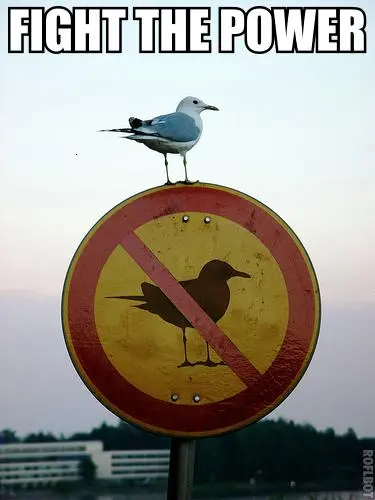
That’s ecovandalism or ecocide not ecology. Fuck whoever came up with that term.